
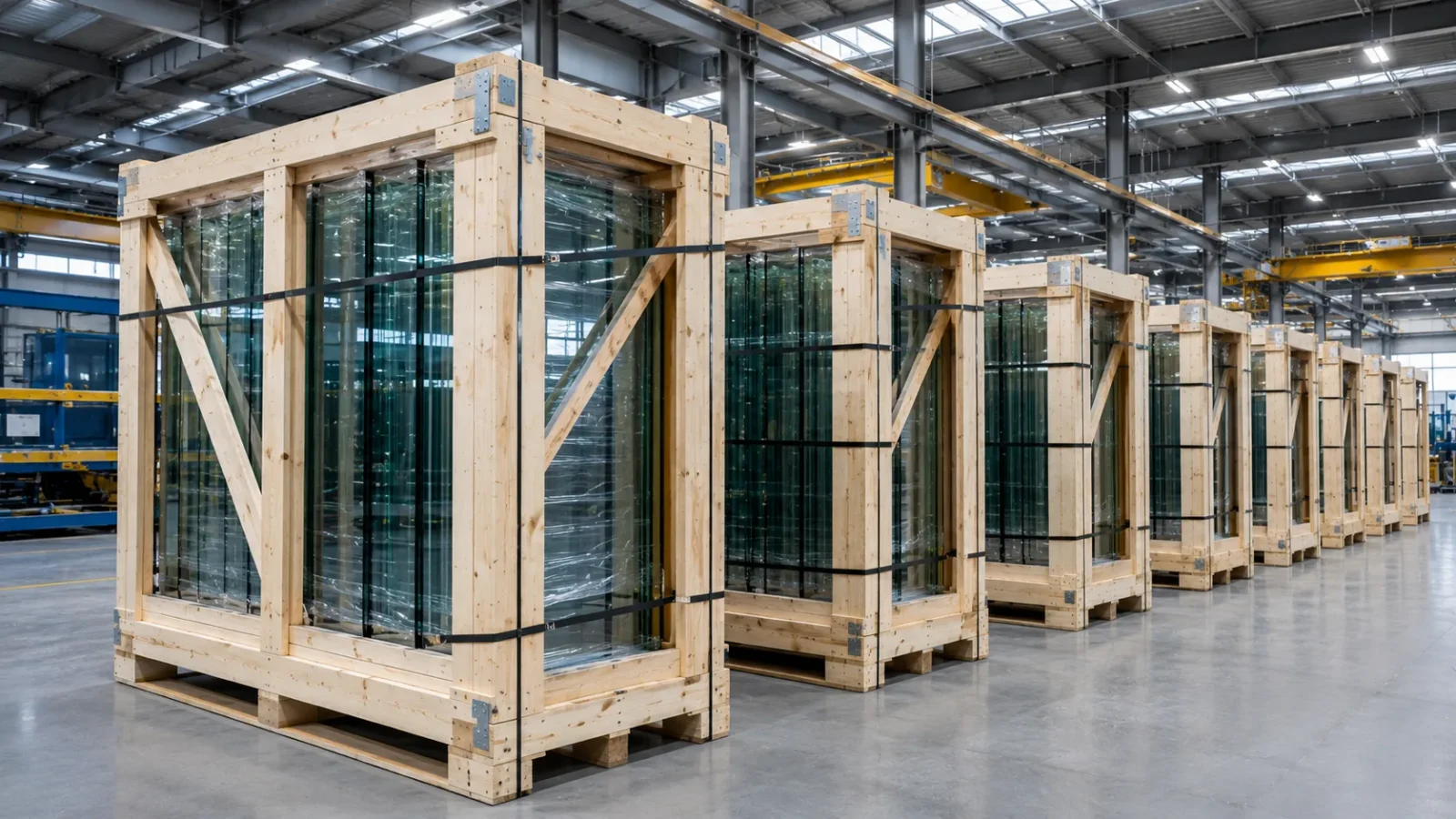
Shipping architectural glass is different from shipping ordinary building materials. Large glass sheets, oversized wooden crates, heavy laminated panels, and curtain wall glass units often require special loading methods to reduce handling risk. For this reason, open-top containers are commonly used in the glass industry, especially for large-format or project-based glass shipments.
An open-top container allows cargo to be loaded from above by crane instead of being pushed through the rear door of a standard dry container. This makes it useful for oversized glass crates, heavy glass panels, and cargo that cannot be safely handled by forklift alone.
What Is an Open-Top Container?
An open-top container is a shipping container without a fixed hard roof. After loading, the top is usually covered with a tarpaulin or removable cover. The main advantage is that cargo can be lifted into the container from above, which is useful when the cargo is too heavy, too tall, or too difficult to load through the container doors.
Open-top containers are commonly available in 20-foot and 40-foot sizes, but the actual internal dimensions, loading limits, and availability should always be confirmed before shipment.
Why Open-Top Containers Are Useful for Glass Shipping
Glass products are fragile, heavy, and often customized to project dimensions. When glass panels are packed in large wooden crates or steel frames, the total package size may make normal rear-door loading difficult. Open-top loading helps reduce unnecessary tilting, dragging, and manual handling during container loading.
For architectural glass suppliers, open-top containers are especially helpful when shipping large or heavy products such as laminated glass, tempered laminated glass, oversized float glass, facade glass, or curtain wall glass.
Glass Products Commonly Shipped in Open-Top Containers
Open-top containers may be considered for the following types of glass shipments:
- Jumbo size float glass sheets
- Large laminated glass panels
- Tempered laminated glass for railings and facades
- Oversized curtain wall glass
- Insulated glass units packed in large crates
- Heavy architectural glass for project delivery
- Custom glass panels that require crane loading
Open-Top Container vs Standard Dry Container
| Item | Open-Top Container | Standard Dry Container |
|---|---|---|
| Loading Method | Top loading by crane | Rear-door loading by forklift or manual handling |
| Suitable Cargo | Oversized, heavy, or difficult-to-load cargo | Standard-sized packaged cargo |
| Glass Application | Large crates, jumbo panels, heavy architectural glass | Regular packaged glass with suitable dimensions |
| Cost | Usually higher due to limited availability and special handling | Usually more economical |
| Handling Requirement | Requires proper lifting, lashing, and loading plan | Standard container loading process |
Packaging Requirements for Glass in Open-Top Containers
Proper packaging is essential when shipping glass by sea. Even if an open-top container makes loading easier, the glass still needs to be protected from movement, edge damage, moisture, and impact during transport.
Common packaging methods include:
- Strong export wooden crates or plywood cases
- Steel frames for large or heavy glass panels
- Soft interlayers between glass sheets
- Edge protection for processed glass
- Moisture-resistant wrapping
- Anti-slip base support
- Proper lashing and blocking inside the container
What Buyers Should Confirm Before Choosing an Open-Top Container
Before confirming the shipping method, buyers should check the final glass size, crate dimensions, gross weight, unloading equipment at destination, and project delivery schedule. The shipping route and destination port may also affect container availability and cost.
For buyers arranging international freight from China, logistics references such as Freight Quote China may help when comparing container options, route planning, and freight quotation requirements.
When Should You Choose an Open-Top Container?
An open-top container may be suitable when the glass cargo cannot be loaded safely through the rear door of a standard container, when crane loading is required, or when the wooden crate is too high or too heavy for normal handling. However, not every glass shipment needs an open-top container. For regular sizes and standard packaging, a dry container may still be the most economical option.
Barrett Limited’s Support for Glass Export Packaging
Barrett Limited supplies architectural and processed glass for international projects. For custom glass orders, we can help evaluate product size, glass thickness, packaging requirements, and container loading considerations before shipment.
Whether your project requires tempered glass, laminated glass, insulated glass, facade glass, or oversized custom glass panels, proper packaging and container planning can help reduce transportation risk and improve delivery efficiency.
FAQ
Can glass be shipped in an open-top container?
Yes. Large, heavy, or oversized glass products can be shipped in open-top containers when top loading is required. The glass must be properly packed, supported, and secured.
Is an open-top container more expensive than a standard container?
In many cases, yes. Open-top containers are less common and may require special handling, so buyers should confirm cost and availability before shipment.
When is a standard dry container enough for glass shipping?
If the glass crates fit through the rear door and can be safely loaded by forklift, a standard dry container may be sufficient.
How do you protect glass during sea freight?
Glass is usually protected with wooden crates, edge guards, soft interlayers, moisture-resistant wrapping, and secure lashing inside the container.