
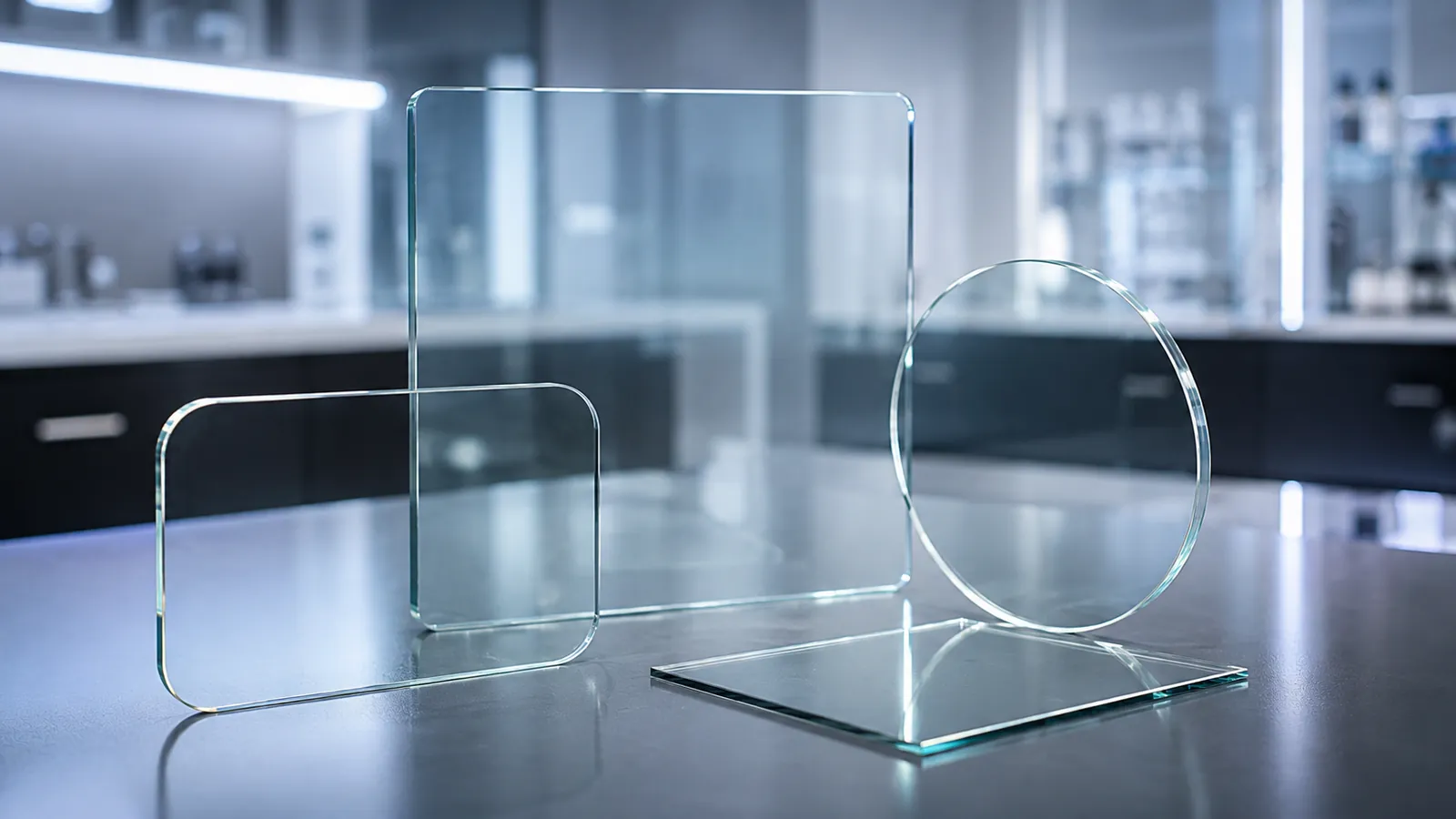
Chemical tempering, also known as chemical strengthening, is a glass strengthening process that improves the surface strength of glass through ion exchange. Unlike thermal tempering, which uses rapid heating and cooling, chemical tempering changes the stress condition of the glass surface through a controlled chemical process.
This method is often used when glass needs high surface strength, good optical quality, and reduced distortion. It is especially useful for thin glass, precision glass components, cover glass, and certain special engineering applications.
What Is Chemical Tempering?
Chemical tempering is a post-production glass strengthening process. The glass is placed in a molten salt bath, where smaller ions in the glass surface are replaced by larger ions from the bath. This ion exchange creates a compressed surface layer, which helps improve the glass strength and resistance to surface damage.
The most common principle involves replacing smaller sodium ions in the glass with larger potassium ions. Because the potassium ions occupy more space, they create compression on the glass surface. Since glass is much stronger in compression than in tension, this surface compression helps the glass resist cracks and bending stress more effectively.
How Does Chemical Tempering Work?
The chemical strengthening process generally includes the following steps:
- The glass is cut and processed to the required size before strengthening.
- The glass surface is cleaned to remove contamination.
- The glass is immersed in a molten potassium salt bath under controlled temperature and time.
- Sodium ions near the glass surface are exchanged with larger potassium ions.
- A surface compression layer is formed.
- The glass is cooled, cleaned, inspected, and packed.
The final performance depends on the glass composition, bath condition, processing temperature, treatment time, surface quality, and depth of the compression layer.
Chemical Tempering vs Thermal Tempering
| Item | Chemical Tempering | Thermal Tempering |
|---|---|---|
| Process | Ion exchange in molten salt bath | Heating followed by rapid cooling |
| Suitable Glass | Thin glass, precision glass, special glass | Common architectural safety glass |
| Optical Distortion | Usually lower | May have roller wave or slight distortion |
| Breakage Pattern | May break into sharp pieces depending on structure | Usually breaks into small granular fragments |
| Cost | Usually higher | Usually more economical for building glass |
| Common Use | Displays, cover glass, thin glass, specialty components | Doors, windows, railings, shower glass, facades |
Is Chemically Tempered Glass Safety Glass?
Chemically tempered glass can be stronger than ordinary annealed glass, but it should not automatically be treated as safety glass. The breakage behavior may still create sharp fragments depending on the glass type and final structure. For applications where human safety is required, laminated glass or tempered laminated glass may be a better choice.
For architectural projects such as railings, skylights, canopies, floors, and overhead glazing, the final glass selection should follow project safety requirements and local building standards.
Advantages of Chemical Tempering
Chemical tempering has several advantages:
- High surface strength
- Good scratch resistance
- Lower optical distortion compared with some thermal processes
- Suitable for thin glass
- Useful for precision applications
- Can improve resistance to surface cracks
Limitations of Chemical Tempering
Chemical tempering is not the best choice for every glass application. It is usually more expensive than thermal tempering, and the process may not be suitable for all large architectural panels. Deep scratches, edge damage, or improper post-processing may reduce the benefit of the strengthened surface layer.
In many building projects, conventional thermally tempered glass or tempered laminated glass remains more practical and cost-effective.
Common Applications of Chemically Tempered Glass
Chemically tempered glass is often used in applications where thin glass, high strength, and good optical quality are required. Common examples include:
- Display cover glass
- Touch panel glass
- Optical glass components
- Special engineering glass
- Thin protective glass
- Aircraft or transportation-related glass components
- Special decorative glass where low distortion is important
How to Choose Between Chemical Tempered Glass and Thermal Tempered Glass
If your project requires standard architectural safety glass for doors, windows, partitions, shower enclosures, balustrades, or facades, thermal tempered glass or tempered laminated glass is often the more common solution. If your project requires thin glass, high surface strength, and minimal distortion, chemical tempering may be considered.
The right choice depends on glass thickness, panel size, safety requirements, application environment, budget, and project standards.
Barrett Limited’s Glass Processing Support
Barrett Limited supplies processed glass for architectural, decorative, and engineering applications. We can help buyers compare tempered glass, laminated glass, float glass, low iron glass, insulated glass, and other processed glass options based on project requirements.
If you are not sure whether your project needs chemical strengthening, thermal tempering, lamination, or another glass processing method, our team can review your application and recommend a suitable glass structure.
FAQ
Is chemical tempering the same as thermal tempering?
No. Chemical tempering uses ion exchange, while thermal tempering uses heating and rapid cooling to create surface compression.
Can chemically tempered glass be used as safety glass?
It depends on the final glass structure and project requirements. For many safety applications, laminated glass or tempered laminated glass may be required.
Is chemically tempered glass stronger than ordinary glass?
Yes, chemical strengthening can significantly improve surface strength compared with ordinary annealed glass.
What applications need chemical tempering?
It is commonly used for thin glass, display glass, precision components, and special applications where high surface strength and low distortion are important.