
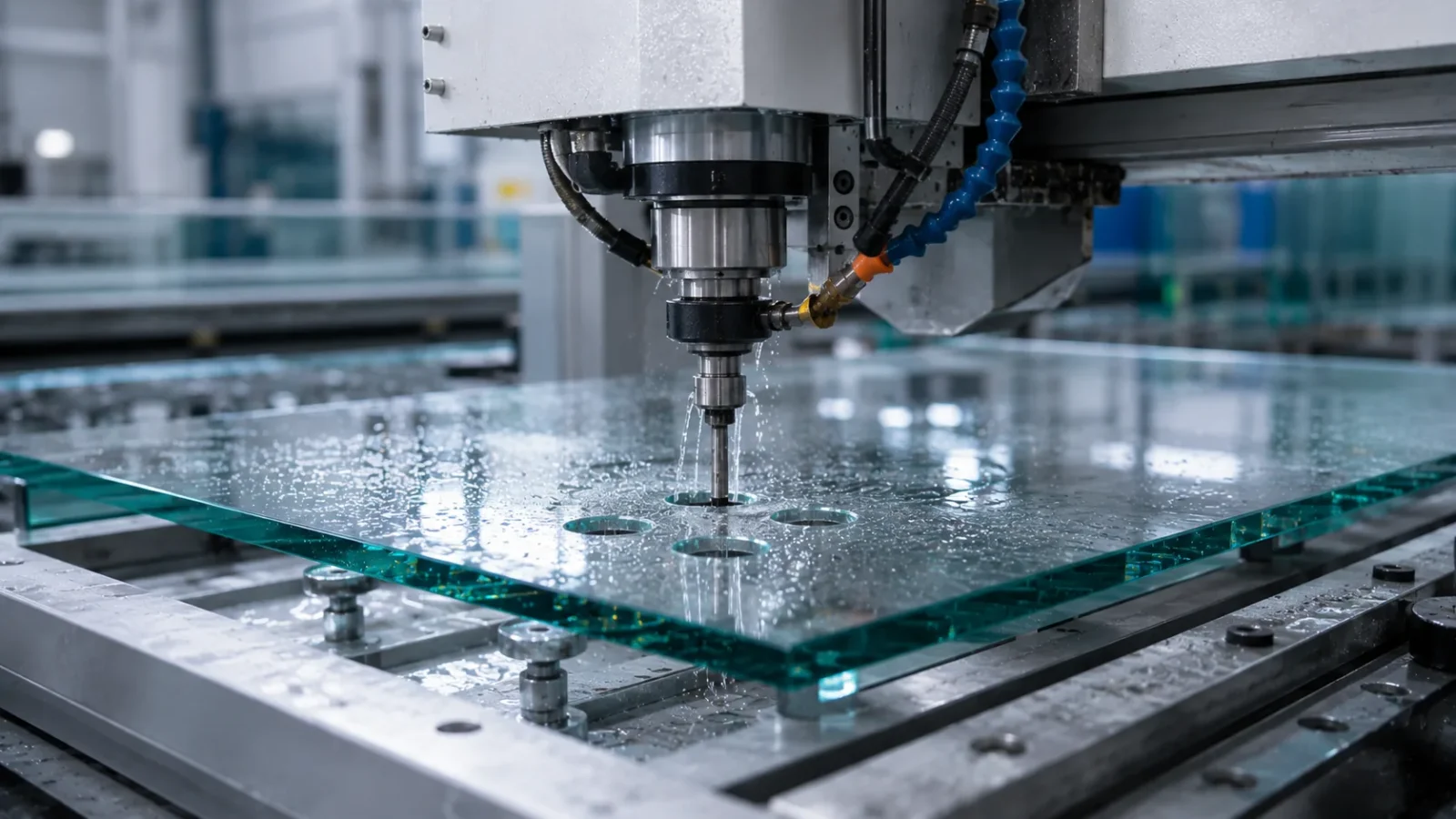
Glass drilling and CNC processing are important steps in custom architectural glass fabrication. Many glass products require holes, notches, cut-outs, slots or shaped processing before installation, especially when the glass needs to work with hinges, handles, clamps, brackets, railing systems or partition hardware.
Barrett Limited provides custom glass drilling and CNC processing support for architectural glass, decorative glass, safety glass and furniture glass projects. These processing services are commonly used for tempered glass, laminated glass, shower glass enclosures, glass balustrade and railing, office glass partitions and decorative glass door panels.
What Is Glass Drilling and CNC Processing?
Glass drilling refers to making holes in glass panels for hardware, fixing systems or installation requirements. CNC glass processing refers to shaped cutting, notching, slotting and cut-out processing based on drawings or templates. These processes help glass panels fit specific hardware and project designs.
For safety glass products, drilling and CNC processing must usually be completed before tempering. Once glass has been tempered, it cannot be cut, drilled or notched again. Therefore, all hole positions, cut-outs and processing details should be confirmed before production.
Glass Drilling and CNC Processing Workflow
A clear processing workflow helps reduce errors and improve installation accuracy, especially for project glass with many holes, notches or special shapes.
- Drawing confirmation: Check glass size, thickness, hole diameter, hole position, notch size, cut-out shape and tolerance requirements.
- Glass selection: Select suitable base glass such as clear float glass, low iron glass, laminated glass, patterned glass or other processed glass.
- Cutting and edging: Cut glass to size and complete necessary edge processing before drilling or CNC work.
- Hole drilling: Drill holes according to hardware drawings, installation requirements and minimum edge distance rules.
- Notching and cut-outs: Process notches, slots, corner cut-outs or custom shapes according to drawings.
- Cleaning and inspection: Check hole position, edge quality, cut-out accuracy, surface condition and drawing consistency.
- Further processing: Continue with tempering, laminating, polishing, coating handling or packing according to the project requirement.
Common Glass Drilling and CNC Processing Types
Different projects require different processing details. The correct processing method should match the hardware system, installation method and final application.
- Round holes: Used for handles, bolts, clamps, standoffs and fixing systems.
- Notches: Used for hinges, brackets, sliding systems and frame connections.
- Cut-outs: Used for handles, locks, sockets, hardware areas and special installation requirements.
- Slots: Used for fixing systems, special hardware or decorative installation details.
- Corner radius processing: Used to improve safety and match design requirements.
- Custom shape processing: Used for special architectural, decorative or furniture glass panels.
Suitable Glass Products
Glass drilling and CNC processing can be used for many types of architectural and decorative glass products. The processing must be planned carefully before tempering or laminating.
- Tempered Glass requires all holes and notches to be completed before tempering.
- Laminated Glass may require accurate holes, notches and edge alignment for project installation.
- Low Iron Glass is suitable for premium projects requiring clearer appearance and accurate hardware processing.
- Frosted Glass and Acid Etched Glass require attention to surface direction during drilling and handling.
- Fluted Glass and Patterned Glass require careful checking of texture direction and visible surface.
Common Applications
Glass drilling and CNC processing are widely used in glass projects that involve hardware installation, fixing systems, sliding systems, frameless structures or special shapes.
- Shower Glass Enclosures for hinges, handles, clamps and sliding door hardware
- Glass Balustrade and Railing for railing clamps, bolts, standoffs and handrail systems
- Glass Pool Fencing for spigots, clamps and outdoor safety hardware
- Office Glass Partitions for framed or frameless partition hardware
- Decorative Glass Door Panels for hinges, handles, locks and sliding systems
- Cabinet Glass Door Panels for hinges, handles and furniture hardware
Key Processing Requirements
Glass drilling and CNC processing should be based on clear drawings. Hole position, hole diameter, edge distance, corner radius and tolerance should be confirmed before production. This is especially important when the glass will be tempered after processing.
| Processing Item | Hole drilling, notching, slotting, cut-outs, shaped processing, edge polishing and hardware openings |
|---|---|
| Suitable Glass | Float glass, low iron glass, tempered glass before heat treatment, laminated glass, frosted glass and decorative glass |
| Important Details | Hole diameter, hole position, edge distance, notch size, cut-out shape, corner radius, tolerance and glass thickness |
| Common Applications | Shower glass, railing glass, pool fencing glass, partition glass, door glass, cabinet glass and architectural glass panels |
| Project Information Needed | Drawings, glass size, thickness, hole details, hardware drawings, application, quantity, tolerance and packing requirements |
Glass Drilling Before Tempering
For tempered glass, drilling must be completed before the tempering process. This includes round holes, notches, slots, handle openings, hinge cut-outs and hardware-related processing.
After glass is tempered, any additional drilling or cutting can cause breakage. Therefore, buyers should confirm the drawings and hardware details before production. This is very important for shower doors, railing panels, glass doors and partition glass.
Hole Position and Edge Distance
Hole position is one of the most important details in glass drilling. If holes are too close to the edge, too close to each other or not matched with hardware requirements, the glass may be difficult to install or may have higher breakage risk.
Before production, hole diameter, center position, edge distance, hardware model and installation direction should be checked carefully. For project orders, every glass panel should match the installation drawing and hardware schedule.
Notches and Cut-Outs for Glass Hardware
Glass notches and cut-outs are commonly used for hinges, locks, handles, sliding door systems, clamps and special frame details. Accurate notch processing helps the glass fit the hardware and improves the final installation quality.
For shower glass, notches are often used for hinges and handles. For glass balustrades and pool fencing, holes and cut-outs may be required for clamps, bolts or spigots. For office partitions, cut-outs may be required for doors, locks or frame systems.
CNC Glass Processing for Custom Shapes
CNC glass processing can support shaped glass panels, corner radius processing, special cut-outs and project-based fabrication requirements. It is useful for architectural glass, furniture glass, interior partitions and decorative glass projects that require more than standard rectangular glass panels.
For special-shaped glass, drawings or templates should be provided. Important details include size, glass thickness, radius, edge finish, hole position, visible surface and application method.
Processing for Laminated Glass
Laminated glass may require careful drilling and processing depending on the final glass structure and application. Hole alignment, edge alignment and interlayer structure should be considered before production.
For railing glass, facade safety glass, partition glass or overhead glass projects, laminated glass may be selected to improve post-breakage retention. In these cases, drilling details should be reviewed together with glass structure, thickness and installation system.
Quality Control for Glass Drilling and CNC Processing
Quality control focuses on hole position, hole diameter, notch accuracy, cut-out shape, edge condition, surface condition, glass size and drawing consistency. Small errors in drilling or notching can affect hardware installation, so project drawings should be checked carefully before production.
Barrett Limited can support project labeling, panel numbering and packing sequence according to drawings, installation areas or customer requirements. This helps reduce confusion during delivery and site installation.
Related Glass Processing Services
Glass drilling and CNC processing are often combined with other glass processing steps. The following processing pages may also be useful for project planning:
- Glass Cutting and Edge Processing
- Tempered Glass Processing
- Laminated Glass Processing
- Curved Glass Processing
- Glass Quality Control
Related Product Options
The following glass products commonly require drilling, notching or custom CNC processing before final production or installation:
Frequently Asked Questions
Can tempered glass be drilled after tempering?
No. Tempered glass cannot be drilled, cut or notched after tempering. All holes, notches, cut-outs and edge processing must be completed before the glass enters the tempering process.
What information is needed for glass drilling?
Please provide glass size, thickness, hole diameter, hole center position, edge distance, hardware drawings, quantity, application and packing requirements.
Can glass have custom notches and cut-outs?
Yes. Glass can be processed with notches, cut-outs, slots and custom shapes according to drawings or templates. These details should be confirmed before tempering or laminating.
Why is hole position important in glass processing?
Hole position affects hardware installation, glass strength and final assembly. Incorrect hole positions may cause installation problems or increase breakage risk.
Can laminated glass be drilled?
Laminated glass can be processed according to project requirements, but the glass structure, thickness, interlayer and application should be reviewed carefully before production.
Request Custom Glass Drilling and CNC Processing
If your project requires glass drilling, notching, cut-outs or CNC glass processing, send us your drawings, glass size, thickness, hole details, hardware information, quantity and packing requirements. Barrett Limited can help review the specifications and suggest suitable processing options for architectural glass, shower glass, railing glass, partition glass and decorative glass projects.