
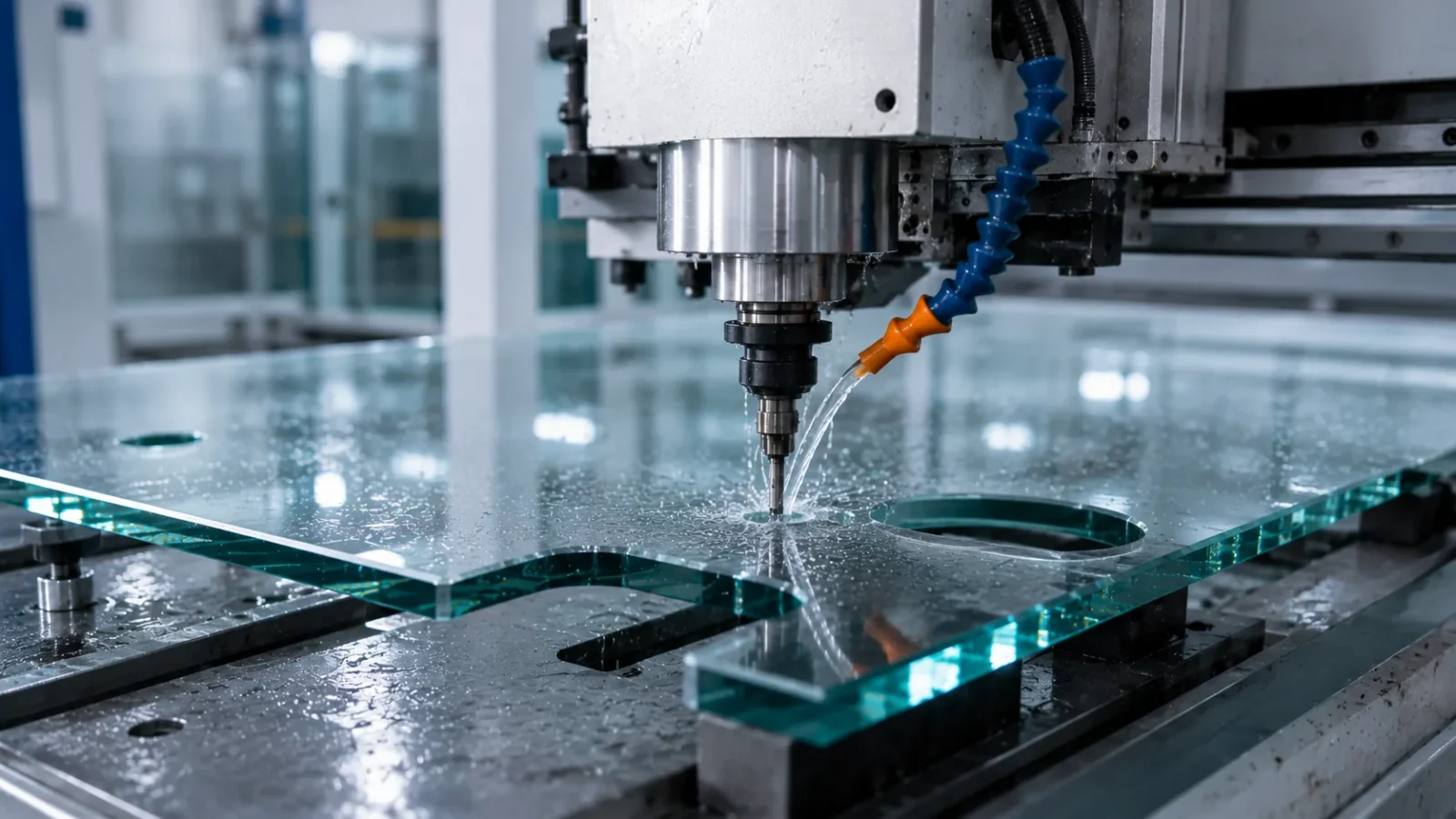
Curved glass processing is used to produce bent or curved glass panels for architectural, decorative, furniture and special design projects. Compared with standard flat glass, curved glass requires more careful control of glass type, thickness, bending radius, mold accuracy, heating process, surface quality and final inspection.
Barrett Limited provides custom curved glass processing support for building and interior projects. Curved glass can be used for curved glass products, tempered glass, laminated glass, low iron glass, architectural facade glass, glass balustrade and railing, shower glass enclosures and decorative glass applications.
What Is Curved Glass Processing?
Curved glass processing is the process of bending glass into a required curve, radius or special shape through controlled heating and forming. It is commonly used when a project requires curved building envelopes, rounded corners, curved railings, curved shower panels, furniture glass or special architectural design elements.
The final curved glass structure depends on the application and safety requirement. Common options include annealed bent glass, curved tempered glass, bent laminated glass and curved laminated safety glass. Each option has different processing methods, performance features and design limitations.
Curved Glass Processing Workflow
A clear curved glass processing workflow helps improve dimensional accuracy, surface quality and project compatibility. Curved glass should be planned carefully before production because bending radius, thickness and mold design can affect the final result.
- Drawing review: Confirm glass size, thickness, bending radius, arc length, chord length, height, structure, tolerance and final application.
- Glass selection: Select suitable base glass such as clear glass, low iron glass, tinted glass, laminated glass or other project-specified glass.
- Cutting and edge processing: Complete required cutting, edge processing, holes or notches before bending or tempering when applicable.
- Mold preparation: Prepare the bending mold according to radius, shape and dimensional requirements.
- Heating and forming: Heat the glass and form it into the required curved shape under controlled conditions.
- Cooling: Cool the glass according to the selected process, such as hot bending, curved tempering or other forming method.
- Lamination or further processing: For bent laminated glass, assemble curved glass layers with interlayer when required.
- Inspection: Check radius, shape accuracy, surface quality, edge quality, optical distortion and dimensional consistency.
- Packing: Pack curved glass with suitable supports, separation materials and export wooden crates when required.
Common Curved Glass Types
Different curved glass projects require different glass types. The choice should be based on safety requirement, bending radius, application position, installation method and design appearance.
- Hot bent glass: Used for decorative glass, furniture glass and selected architectural design projects.
- Curved tempered glass: Used where higher strength and safer breakage behavior are required.
- Bent laminated glass: Used where safety retention, acoustic control or structural performance is required.
- Curved low iron glass: Used for premium projects requiring clearer appearance and reduced greenish tint.
- Curved facade glass: Used for rounded building corners, curved curtain walls and special envelope designs.
- Curved decorative glass: Used for interiors, furniture, display structures and custom design applications.
Suitable Glass Products
Curved glass processing can be combined with different glass products according to project design, safety requirement and visual appearance.
- Curved Glass for architectural, decorative and special design applications
- Tempered Glass for curved safety glass applications where higher strength is required
- Laminated Glass for curved safety glass with post-breakage retention
- Low Iron Glass for premium curved glass projects requiring clearer appearance
- Reflective Glass for selected curved facade and solar control applications
- Frosted Glass for decorative curved privacy glass applications
Common Applications
Curved glass is used when flat glass cannot meet the design or installation requirement. It is suitable for architectural features, interior decoration, furniture, railing systems and special project designs.
- Architectural Facade Glass and Curtain Wall Glass for curved building envelopes and rounded corners
- Glass Balustrade and Railing for curved balcony, staircase and terrace railing systems
- Shower Glass Enclosures for curved shower doors and bathroom glass panels
- Custom Table Top Glass for curved furniture glass and decorative table projects
- Office Glass Partitions for curved interior glass walls and commercial design areas
- Showroom glass, hotel interiors, retail displays and custom decorative glass structures
Key Processing Requirements
Curved glass processing requires accurate control of radius, shape, thickness, glass type, mold quality and final inspection. Before production, project drawings should clearly show the glass dimensions and curved shape details.
| Processing Item | Glass cutting, edge processing, mold preparation, heating, bending, cooling, laminating, inspection and packing |
|---|---|
| Common Structures | Hot bent glass, curved tempered glass, bent laminated glass, curved low iron glass and curved facade glass |
| Important Details | Glass size, thickness, bending radius, arc length, chord length, height, tolerance, surface quality and installation method |
| Common Applications | Facades, curved railings, shower glass, furniture glass, partitions, display glass and decorative interiors |
| Project Information Needed | Drawings, glass size, thickness, radius, structure, application, quantity, tolerance and packing requirements |
Curved Tempered Glass
Curved tempered glass is used when a project requires both curved shape and improved safety performance. It is commonly used for curved railings, shower enclosures, building corners, partition systems and selected architectural glass applications.
As with standard tempered glass, all cutting, edge processing, holes and notches should be completed before tempering. Curved tempered glass also requires careful control of bending radius, heating conditions and cooling process to maintain shape accuracy and safety performance.
Bent Laminated Glass
Bent laminated glass combines curved glass geometry with laminated glass safety performance. It can help provide post-breakage retention and is suitable for curved railings, facades, canopies, skylights, partitions and architectural design features.
For laminated glass structures, the glass shape, interlayer type, edge alignment and final application should be reviewed carefully. Bent laminated glass may require more detailed production planning than flat laminated glass because curved shape accuracy affects assembly and installation.
Hot Bent Glass for Decorative Projects
Hot bent glass is commonly used for decorative glass, furniture glass, display glass and selected architectural design areas. It allows glass to be formed into curved or special shapes according to the design requirement.
For decorative hot bent glass, surface quality, curve consistency, edge finish and visual appearance are important. When the glass edge is exposed or frequently touched, polished edge processing should be considered before final production.
Curved Low Iron Glass
Low iron glass can be used for curved glass projects where a clearer and more neutral appearance is required. It is suitable for premium interiors, high-end facade areas, display structures, furniture glass and decorative architectural features.
Low iron curved glass can reduce the greenish tint that may be visible in thicker glass or exposed edges. It is often selected for projects where transparency and color clarity are important.
Radius and Drawing Confirmation
Radius confirmation is one of the most important steps before curved glass production. The project drawing should clearly show the bending radius, arc length, chord length, height, glass thickness, installation direction and tolerance requirement.
If the drawing is incomplete, the final curved glass may not match the frame, railing system, shower hardware or facade structure. For project orders, radius templates or detailed CAD drawings are recommended before production.
Quality Control for Curved Glass Processing
Quality control for curved glass focuses on radius accuracy, shape consistency, edge quality, surface condition, optical distortion, size tolerance, glass structure and packing safety. For architectural projects, visual consistency and installation compatibility are especially important.
For project-based curved glass orders, labels and packing sequence can be arranged according to drawing numbers, installation areas, floor numbers or customer requirements. This helps reduce confusion during delivery and installation.
Related Glass Processing Services
Curved glass processing is often related to other glass processing steps. The following pages may also be useful for project planning:
- Glass Cutting and Edge Processing
- Glass Drilling and CNC Processing
- Tempered Glass Processing
- Laminated Glass Processing
- Glass Quality Control
Related Product Options
The following glass products are commonly related to curved glass processing:
Frequently Asked Questions
What is curved glass processing?
Curved glass processing is the process of bending glass into a required radius, curve or special shape through controlled heating and forming. It is used for architectural, decorative, furniture and special glass projects.
Can curved glass be tempered?
Yes. Curved tempered glass can be produced for projects requiring curved shape and safety performance. The feasibility depends on glass size, thickness, radius, structure and production requirements.
Can curved glass be laminated?
Yes. Bent laminated glass can be produced by combining curved glass layers with interlayers. It is used for railings, facades, canopies, partitions and safety glass applications.
What information is needed for curved glass production?
Please provide drawings, glass size, thickness, bending radius, arc length, chord length, height, glass structure, application, quantity and packing requirements.
Where is curved glass commonly used?
Curved glass is commonly used for facades, curved railings, shower enclosures, partitions, furniture, displays, hotel interiors and custom architectural design elements.
Request Custom Curved Glass Processing
If your project requires custom curved glass processing, send us your drawings, glass size, thickness, radius, structure, application and packing details. Barrett Limited can help review the specifications and suggest suitable curved glass options for architectural, decorative, safety and furniture glass projects.