
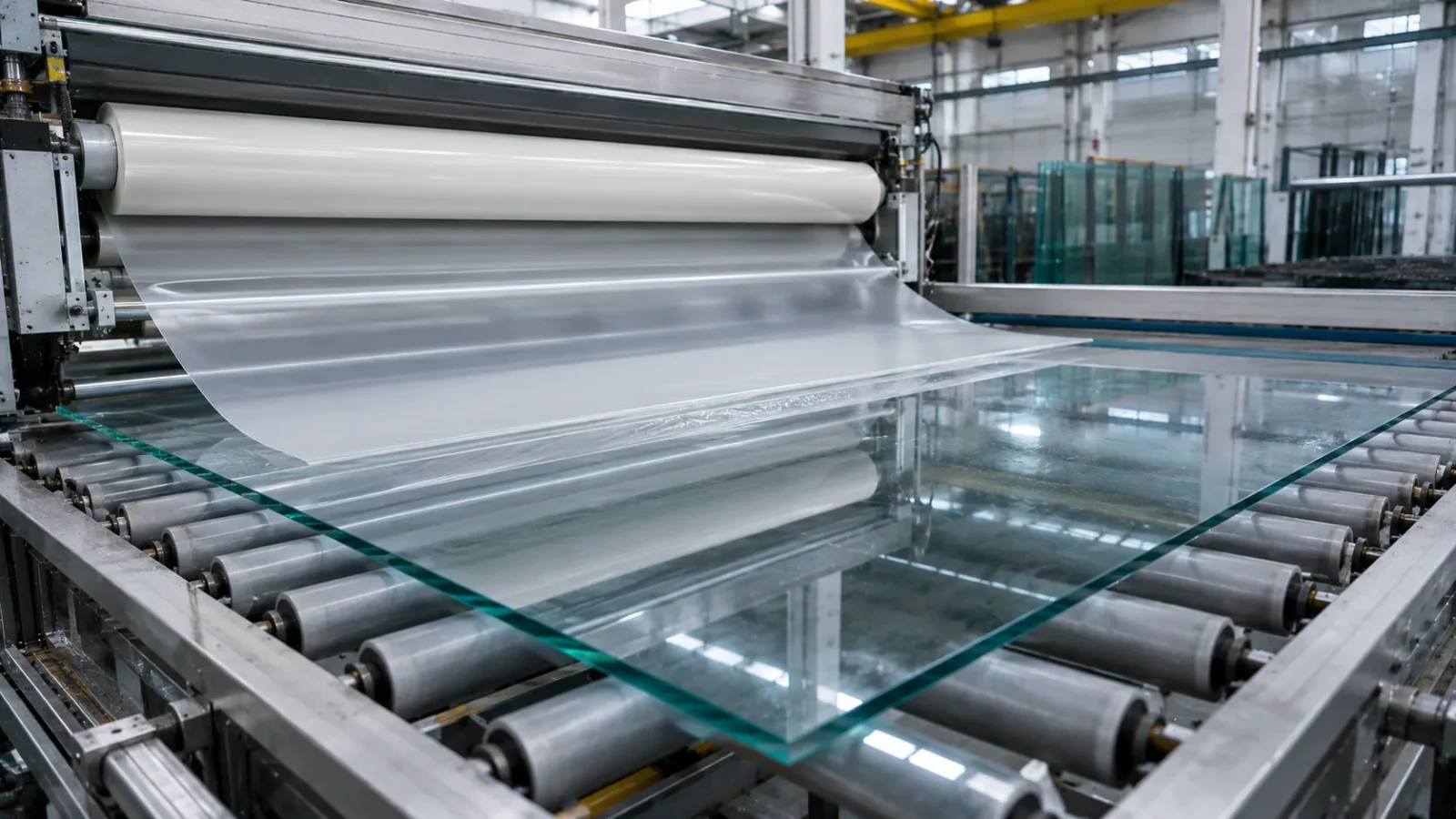
Laminated glass processing is an important safety glass manufacturing process for architectural, commercial and decorative glass projects. It combines two or more glass sheets with interlayers such as PVB, SGP or other safety interlayers to create a glass structure with improved safety, post-breakage retention, acoustic performance and design flexibility.
Barrett Limited provides custom laminated glass processing support for building facade projects, glass railings, partitions, doors, windows, canopies, skylights and safety glass applications. Laminated glass is commonly used for laminated glass products, glass balustrade and railing, architectural facade glass, office glass partitions and other safety-sensitive architectural glass projects.
What Is Laminated Glass Processing?
Laminated glass processing is the process of bonding two or more glass layers together with one or more interlayers. After assembly, the glass and interlayer structure is processed through pre-pressing and autoclave treatment to remove air and create strong adhesion between glass and interlayer.
When laminated glass breaks, the interlayer helps hold the broken glass fragments together. This post-breakage retention makes laminated glass suitable for applications where safety, security, fall protection, sound reduction or glass retention is required.
Laminated Glass Processing Workflow
A stable laminated glass processing workflow is important for adhesion quality, visual appearance and long-term durability. The typical process includes glass preparation, interlayer assembly, pre-pressing, autoclave processing and inspection.
- Drawing review: Confirm glass size, thickness, structure, interlayer type, edge details, holes, notches, application and safety requirements.
- Glass cutting: Cut each glass sheet to the required size according to project drawings.
- Edge processing: Grind or polish edges according to the final application and visible edge requirements.
- Glass washing: Clean and dry the glass surface to remove dust, oil, particles and other contamination.
- Interlayer assembly: Place PVB, SGP or other interlayer between glass sheets in a clean environment.
- Pre-pressing: Remove air between glass and interlayer through rolling or vacuum pre-pressing.
- Autoclave processing: Use controlled temperature and pressure to complete bonding and improve adhesion.
- Cooling and inspection: Check bubbles, delamination, edge quality, size accuracy, visual appearance and glass structure.
- Packing: Pack laminated glass with separators, labels and export wooden crates according to project requirements.
Common Laminated Glass Structures
Laminated glass can be designed with different glass layers, interlayers and thickness combinations. The final structure should be selected according to safety requirement, application, size, support condition and local project standard.
- Clear laminated glass: Used for general architectural safety glass and interior projects.
- Tempered laminated glass: Combines tempered glass strength with laminated glass post-breakage retention.
- Low iron laminated glass: Used where higher transparency and reduced greenish tint are required.
- SGP laminated glass: Suitable for projects requiring stronger interlayer performance and structural stability.
- PVB laminated glass: Commonly used for safety, acoustic and architectural glazing applications.
- Bullet-resistant laminated glass: Multi-layer laminated structures used for higher security requirements.
Suitable Glass Products
Laminated glass processing can be used with many base glass types. The glass structure should be selected according to safety, transparency, appearance and application requirements.
- Laminated Glass for architectural safety glass applications
- Tempered Glass for tempered laminated glass structures
- Low Iron Glass for premium laminated glass with clearer appearance
- Bullet-Proof Glass for higher security laminated glass structures
- Frosted Glass for privacy laminated glass and interior applications
- Reflective Glass for selected laminated facade and solar control applications
Common Applications
Laminated glass is widely used where safety, post-breakage retention, acoustic control or security is important. It can be used alone or combined with insulated glass units for building envelope projects.
- Architectural Facade Glass and Curtain Wall Glass for building envelope projects
- Glass Balustrade and Railing for balconies, stairs, terraces and decks
- Glass Pool Fencing for outdoor safety barriers
- Office Glass Partitions for commercial interior safety and acoustic control
- Architectural Window Glass for safety, acoustic and energy-related window systems
- Decorative Glass Door Panels for interior and commercial door projects
Key Processing Requirements
Laminated glass processing requires careful control of glass cleanliness, interlayer quality, temperature, pressure, humidity, edge alignment and final inspection. Small contamination or air residue may cause bubbles, visual defects or adhesion problems.
| Processing Item | Cutting, edging, washing, interlayer assembly, pre-pressing, autoclave processing, inspection and packing |
|---|---|
| Common Interlayers | PVB, SGP, acoustic PVB, colored interlayer and project-specific safety interlayers |
| Important Details | Glass structure, thickness, interlayer type, edge alignment, bubbles, delamination, size accuracy and visual quality |
| Common Applications | Facades, railings, windows, partitions, doors, canopies, skylights, floors and security glass projects |
| Project Information Needed | Drawings, glass size, thickness, structure, interlayer type, application, safety requirement, quantity and packing details |
PVB Laminated Glass Processing
PVB laminated glass is commonly used for architectural safety glass, windows, doors, partitions and general building applications. PVB interlayer can provide safety retention, acoustic improvement and design flexibility.
During PVB laminated glass processing, glass washing, interlayer storage, temperature, humidity and pre-pressing quality should be controlled carefully. Clean assembly conditions help reduce bubbles, contamination and visual defects.
SGP Laminated Glass Processing
SGP laminated glass is often selected for projects requiring stronger interlayer performance, higher stiffness or improved post-breakage behavior. It is commonly considered for railings, facades, canopies, floors and other safety-sensitive architectural applications.
Compared with standard PVB laminated glass, SGP laminated glass may be specified when the project requires higher structural performance. The final selection should be based on project drawings, safety requirements, support conditions and local standards.
Tempered Laminated Glass
Tempered laminated glass combines the strength of tempered glass with the post-breakage retention of laminated glass. It is commonly used for railings, facades, pool fencing, canopies, skylights and public building safety applications.
All cutting, edge processing, drilling and notching must be completed before tempering. After tempering, the glass sheets are assembled with interlayer and processed through lamination. Correct edge alignment and glass flatness are important for final quality.
Laminated Glass for Acoustic Control
Laminated glass can improve acoustic performance depending on glass thickness, interlayer type and full glazing system design. Acoustic laminated glass is often used for offices, hotels, apartments, schools, hospitals and buildings near roads, airports or busy urban areas.
For acoustic glass projects, the glass structure should be selected according to the required sound reduction performance, frame system and installation conditions.
Laminated Glass for Safety and Security
Laminated glass is widely used in safety and security glass applications because the interlayer can help hold broken glass fragments together. This feature is important for railings, overhead glazing, public spaces, schools, hospitals, commercial buildings and security-sensitive areas.
For higher security requirements, multi-layer laminated glass or bullet-proof glass structures may be considered. The final structure should be selected according to project security level, glass size, support condition and testing requirements.
Edge Quality and Delamination Control
Edge quality is important for laminated glass durability and appearance. Poor edge processing, moisture exposure or incorrect handling may increase the risk of edge defects or delamination. For exposed-edge laminated glass, edge finish and sealing details should be considered carefully.
For exterior applications, railing systems, facades or wet environments, interlayer selection, edge protection and installation design should be reviewed before production.
Quality Control for Laminated Glass Processing
Quality control for laminated glass focuses on glass size, thickness, structure, interlayer alignment, bubbles, contamination, delamination, optical quality, edge quality and packing safety. For project orders, every laminated glass panel should match the drawing, glass schedule and installation area.
Barrett Limited can support project labels, packing sequence and export wooden crate packing according to drawings, installation zones, floor numbers or customer requirements. This helps improve delivery control and site installation efficiency.
Related Glass Processing Services
Laminated glass processing is often combined with other glass processing steps. The following pages may also be useful for project planning:
- Glass Cutting and Edge Processing
- Glass Drilling and CNC Processing
- Tempered Glass Processing
- Insulated Glass Unit Manufacturing
- Glass Quality Control
Related Product Options
The following glass products are commonly related to laminated glass processing:
Frequently Asked Questions
What is laminated glass processing?
Laminated glass processing bonds two or more glass sheets together with interlayers such as PVB or SGP. The process usually includes glass washing, interlayer assembly, pre-pressing, autoclave processing and quality inspection.
What is the difference between PVB and SGP laminated glass?
PVB is commonly used for general architectural safety glass, while SGP is often selected for projects requiring higher stiffness, stronger interlayer performance or improved post-breakage behavior.
Can tempered glass be laminated?
Yes. Tempered glass can be laminated after tempering. All cutting, drilling and edge processing must be completed before tempering, and then the tempered glass sheets can be assembled with interlayer for lamination.
Where is laminated glass commonly used?
Laminated glass is commonly used for facades, railings, windows, doors, partitions, canopies, skylights, floors and security glass applications.
What information is needed for laminated glass production?
Please provide drawings, glass size, thickness, glass structure, interlayer type, application, safety requirement, quantity, edge details and packing requirements.
Request Custom Laminated Glass Processing
If your project requires custom laminated glass processing, send us your drawings, glass size, thickness, glass structure, interlayer requirement, application and packing details. Barrett Limited can help review the specifications and suggest suitable laminated glass options for architectural, decorative, safety and security glass projects.