
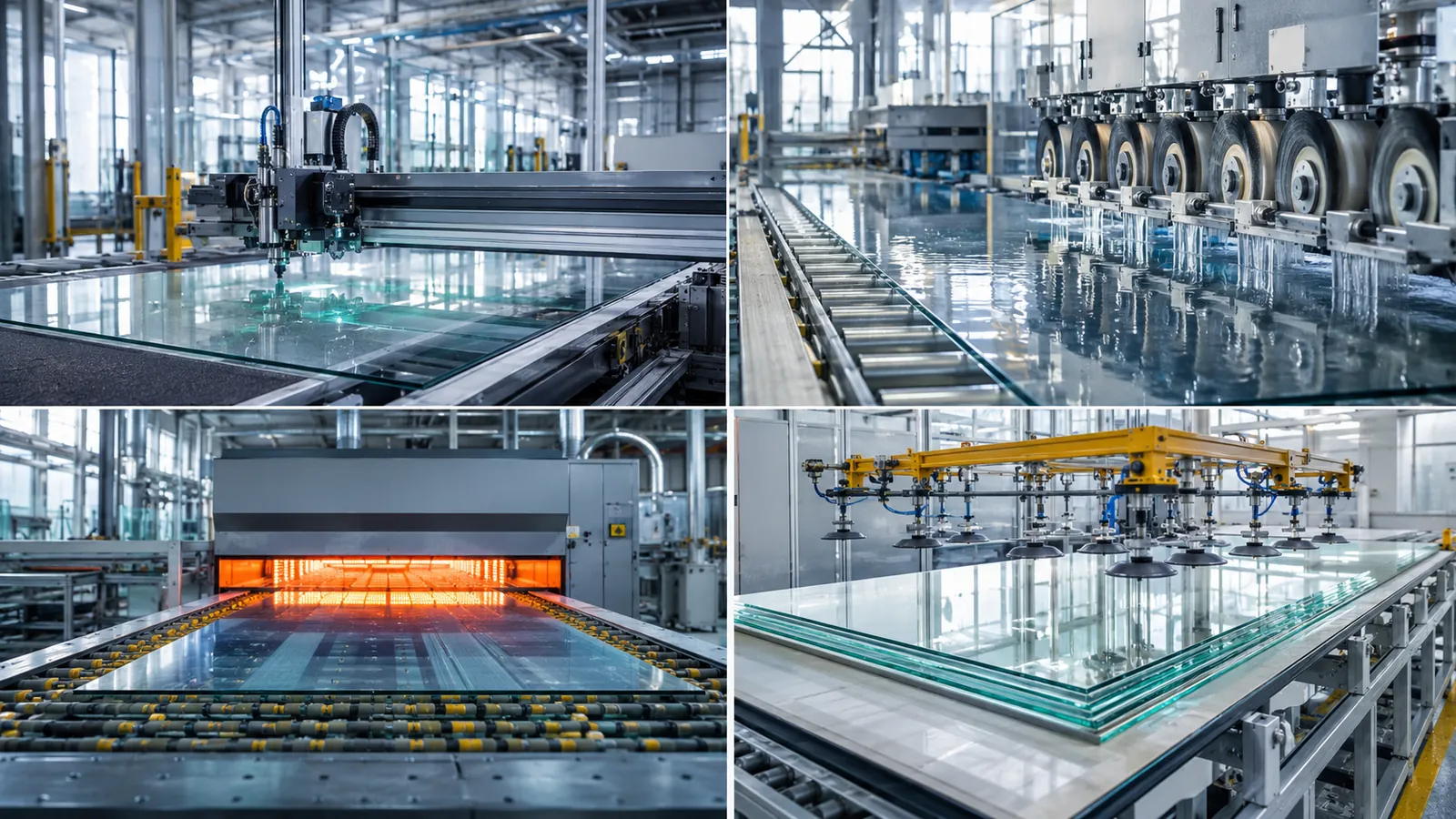
Glass processing is the series of manufacturing steps that transform basic flat glass into finished products for architectural, decorative, and industrial use. For buyers, designers, contractors, and project managers, understanding glass processing is important because it directly affects glass performance, appearance, safety, and installation.
At Barrett Limited, glass processing usually includes glass cutting, edge processing, drilling, CNC fabrication, tempering, lamination, insulated glass manufacturing, and quality inspection. Different projects require different processes depending on the application, such as doors, windows, facades, partitions, shower enclosures, railings, furniture, and decorative interiors.
What Is Glass Processing?
Glass processing refers to the secondary fabrication work carried out after the base glass has been produced. Standard float glass is only the starting material. In most real projects, the glass must be cut, shaped, polished, strengthened, laminated, or assembled before it can be installed.
For example, a simple clear glass sheet may become a tempered shower panel, a laminated railing panel, a Low-E insulated glass unit, or a decorative acid etched partition after proper processing.
Why Is Glass Processing Important?
Glass processing is important because raw glass is rarely used directly in construction or interior projects. Most applications require improved strength, safer breakage performance, edge finishing, custom shapes, holes for hardware, or special surface treatments. Proper processing ensures the glass is suitable for both practical use and visual presentation.
It also improves production accuracy. Correct processing helps reduce installation problems, fitting errors, and project delays. For overseas buyers, understanding processing requirements can also improve communication during quotation and production.
Main Types of Glass Processing
1. Glass Cutting
Glass cutting is the first step in many processing workflows. Large glass sheets are cut into the sizes needed for windows, doors, partitions, railings, tabletops, and other applications. Accurate cutting is essential because the final dimensions affect further processing and installation.
2. Edge Processing
Edge processing includes arrised edges, polished edges, beveled edges, and other finishing methods. This process improves both safety and appearance. Edge processing is especially important for exposed-edge products such as shower glass, furniture glass, shelves, railings, and decorative panels.
3. Glass Drilling and CNC Fabrication
Many glass products need holes, slots, cut-outs, or notches for handles, hinges, fittings, and other hardware. Glass drilling and CNC processing make it possible to create these details accurately. This is common for shower doors, glass doors, office partitions, balustrades, and custom architectural installations.
4. Tempering
Tempering is a heat treatment process used to improve the strength of glass. Tempered glass is widely used in architectural and interior applications because it is stronger than ordinary annealed glass and provides safer breakage behavior. Tempered glass is commonly used for doors, partitions, shower enclosures, facades, and furniture.
5. Lamination
Laminated glass is made by bonding two or more glass panels together with an interlayer, such as PVB or SGP. This process improves safety and post-breakage performance, because broken glass pieces tend to remain attached to the interlayer. Laminated glass is often used for railings, skylights, canopies, facades, sound control glazing, and security applications.
6. Insulated Glass Manufacturing
Insulated glass units are made by combining two or more panes of glass with spacer bars and sealed air or gas space between them. This process improves thermal insulation and energy performance. Insulated glass is commonly used in windows, curtain walls, and facade systems.
Common Glass Processing Applications
Glass processing is widely used across many building and interior applications, including:
- Tempered glass doors and partitions
- Laminated glass railings and balustrades
- Insulated glass windows and facades
- Frosted and acid etched privacy glass
- Decorative patterned and fluted glass
- Shower enclosures and bathroom glass
- Furniture glass such as tabletops and cabinet doors
What Should Buyers Confirm Before Glass Processing?
Before production starts, buyers should provide clear project details. Important information usually includes:
- Glass type
- Glass thickness
- Size and quantity
- Edge type
- Hole and cut-out details
- Tempering or lamination requirements
- Application and installation environment
- Packaging and shipping requirements
The more complete the specification is, the easier it becomes to prepare an accurate quotation and reduce production errors.
Glass Processing and Product Quality
Good glass processing is not only about machinery. It also depends on quality control, dimensional accuracy, edge quality, surface inspection, and proper packaging. For export orders, strong packaging is especially important because processed glass must arrive safely after international transportation.
At Barrett Limited, glass processing support focuses on both product quality and practical project needs. This includes matching the right processing method to the right application and helping buyers choose suitable glass structures for safety, appearance, and installation.
Conclusion
Glass processing is the foundation of modern architectural and decorative glass supply. Cutting, edging, drilling, tempering, lamination, and insulated glass manufacturing all play an important role in transforming raw glass into finished products for real projects. Whether the application is a window, partition, shower enclosure, railing, facade, or decorative interior element, the right processing method is essential for performance and reliability.
If you are sourcing custom glass products for your project, Barrett Limited can support your requirements with practical processing solutions, stable quality control, and export-ready supply.