
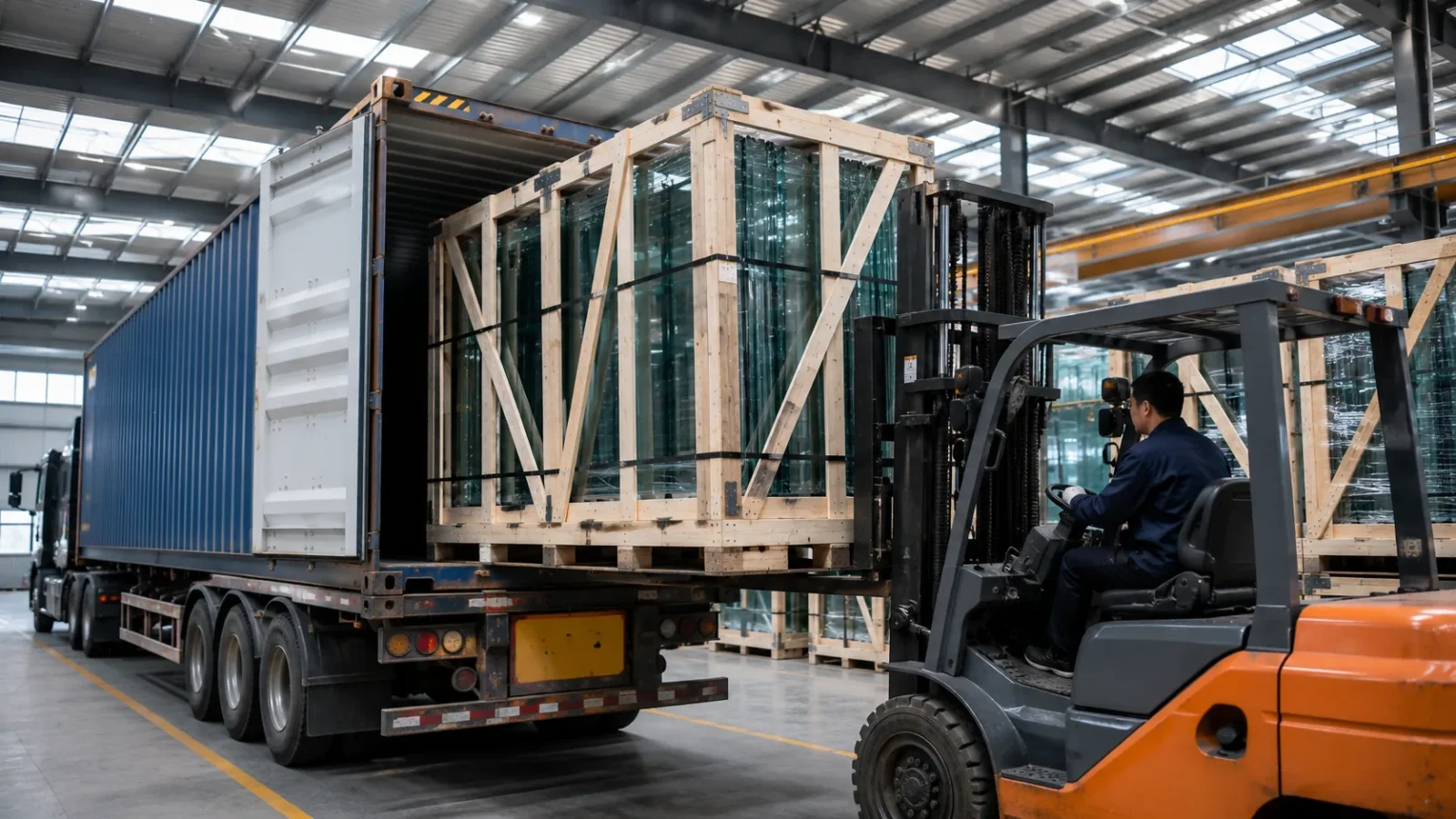
Glass shipping is an important part of international architectural glass supply. Because glass is heavy, fragile, and often custom processed, proper packaging, container loading, and logistics planning are essential before shipment. For buyers of tempered glass, laminated glass, insulated glass, facade glass, railing glass, shower glass, and decorative glass, understanding the shipping process can help reduce breakage risk and improve project delivery efficiency.
Architectural glass is different from many other building materials. It may have polished edges, drilled holes, laminated layers, Low-E coatings, large sizes, or special shapes. These features make export packaging and loading methods especially important.
What Is Glass Shipping?
Glass shipping refers to the process of preparing, packing, loading, transporting, and delivering glass products from the supplier to the buyer or project site. For overseas orders, glass shipping usually includes export packaging, wooden crate design, container loading, sea freight arrangement, customs documents, and destination unloading preparation.
A good glass shipping plan should protect the glass during factory handling, container loading, sea transportation, port handling, inland delivery, and final unloading.
Why Architectural Glass Shipping Needs Careful Planning
Architectural glass products are often customized according to project drawings. If the glass breaks during transport, it may cause replacement costs, project delays, and installation problems. This is why packaging and logistics should be considered before production is completed.
Large facade glass, oversized laminated glass, insulated glass units, curved glass, and polished decorative glass all require careful handling. The shipping plan should match the glass size, thickness, weight, crate dimensions, container type, and unloading conditions.
Common Glass Products for Export Shipping
International glass shipping commonly includes many types of architectural and processed glass products:
- Tempered glass for doors, partitions, shower enclosures, and commercial glazing
- Laminated glass for railings, skylights, canopies, and safety applications
- Tempered laminated glass for balustrades, balconies, staircases, and pool fencing
- Insulated glass units for windows, facades, and curtain walls
- Low-E glass and reflective glass for energy-efficient buildings
- Mirror glass, acid etched glass, patterned glass, and frosted glass for interiors
- Oversized architectural glass panels for commercial building projects
Export Packaging for Glass Shipping
Export packaging is one of the most important steps in glass shipping. The packaging method should protect the glass from impact, vibration, moisture, edge damage, and movement inside the container.
Common export packaging methods include:
- Wooden crates: Used for standard glass sheets and processed glass panels.
- Plywood cases: Suitable for many export orders and container shipments.
- A-frame racks: Used for large glass panels that need vertical support.
- Interlayer protection: Soft pads, paper, cork, or foam placed between glass sheets.
- Edge protection: Used to protect polished edges, corners, and drilled areas.
- Moisture protection: Plastic wrapping or protective film used for long-distance shipping.
- Clear handling marks: Used to guide lifting, unloading, and storage direction.
How Is Glass Loaded into Containers?
Container loading should be planned according to the crate size, gross weight, glass orientation, loading equipment, and unloading method at the destination. Most glass shipments can be loaded into standard dry containers if the crates fit through the container door and can be safely handled by forklift.
During loading, glass crates should be placed securely and fixed properly to prevent movement during transportation. Weight distribution is also important because glass products are heavy and concentrated loads may affect container safety.
When Does Glass Shipping Need an Open-Top Container?
Some glass shipments may require an open-top container. This usually happens when the wooden crates are too tall, too heavy, or difficult to load through the rear door of a standard container. Open-top loading allows the cargo to be lifted from above by crane.
Open-top containers may be used for oversized facade glass, jumbo glass crates, heavy laminated glass, large curtain wall panels, or special architectural glass projects. Buyers can refer to official container specifications from shipping companies, such as Hapag-Lloyd open-top container specifications, when checking loading dimensions.
Glass Shipping Checklist for Buyers
Before confirming a glass shipping plan, buyers should prepare the following information:
- Glass type and application
- Glass size, thickness, and structure
- Quantity and total square meters
- Crate dimensions and gross weight
- Destination port and delivery address
- Unloading equipment at the destination
- Container type preference
- Project delivery schedule
- Special handling or packaging requirements
How Packaging Affects Glass Shipping Cost
Glass shipping cost is affected by product size, crate size, total weight, container type, shipping route, destination port, and inland transportation. Oversized glass, special packaging, open-top containers, and urgent delivery can increase the total logistics cost.
For accurate quotation, buyers should provide complete drawings, product specifications, quantity, destination information, and packaging requirements at the beginning of the order process.
How to Reduce Breakage Risk During Glass Shipping
To reduce breakage risk, glass should be packed with strong support, proper spacing, edge protection, and stable fixing inside the container. The packaging should prevent glass-to-glass contact and reduce vibration during transport.
For processed glass products such as tempered glass, laminated glass, insulated glass, mirror glass, and Low-E glass, surface protection and edge protection are especially important. Clear loading marks also help workers handle the crates correctly.
Barrett Limited Glass Shipping Support
Barrett Limited supports international buyers with glass packaging and shipping preparation for architectural glass projects. We help evaluate glass size, crate design, container loading, export packaging, and product protection according to the project requirements.
Our glass shipping support covers tempered glass, laminated glass, insulated glass, facade glass, railing glass, shower glass, mirror glass, acid etched glass, patterned glass, and custom processed glass products for overseas building and interior projects.
Conclusion
Glass shipping is not only about moving products from one country to another. It is part of the complete supply process for architectural glass projects. Proper packaging, container loading, logistics planning, and destination unloading preparation can help reduce damage risk and improve delivery reliability.
If you are sourcing architectural glass for an overseas project, preparing complete shipping information early can make quotation, production, packaging, and delivery more efficient.
FAQ About Glass Shipping
How is architectural glass packed for export?
Architectural glass is usually packed in wooden crates, plywood cases, or A-frame racks with interlayers, edge protection, and secure loading support.
Yes. Many glass products can be shipped in standard dry containers if the crates fit through the container door and can be safely loaded.Can glass be shipped in a standard container?
An open-top container may be needed when glass crates are oversized, too tall, too heavy, or require crane loading from above.When does glass shipping need an open-top container?
Buyers should provide glass type, size, thickness, quantity, crate details, destination port, unloading method, and delivery schedule.What information is needed before glass shipping?