
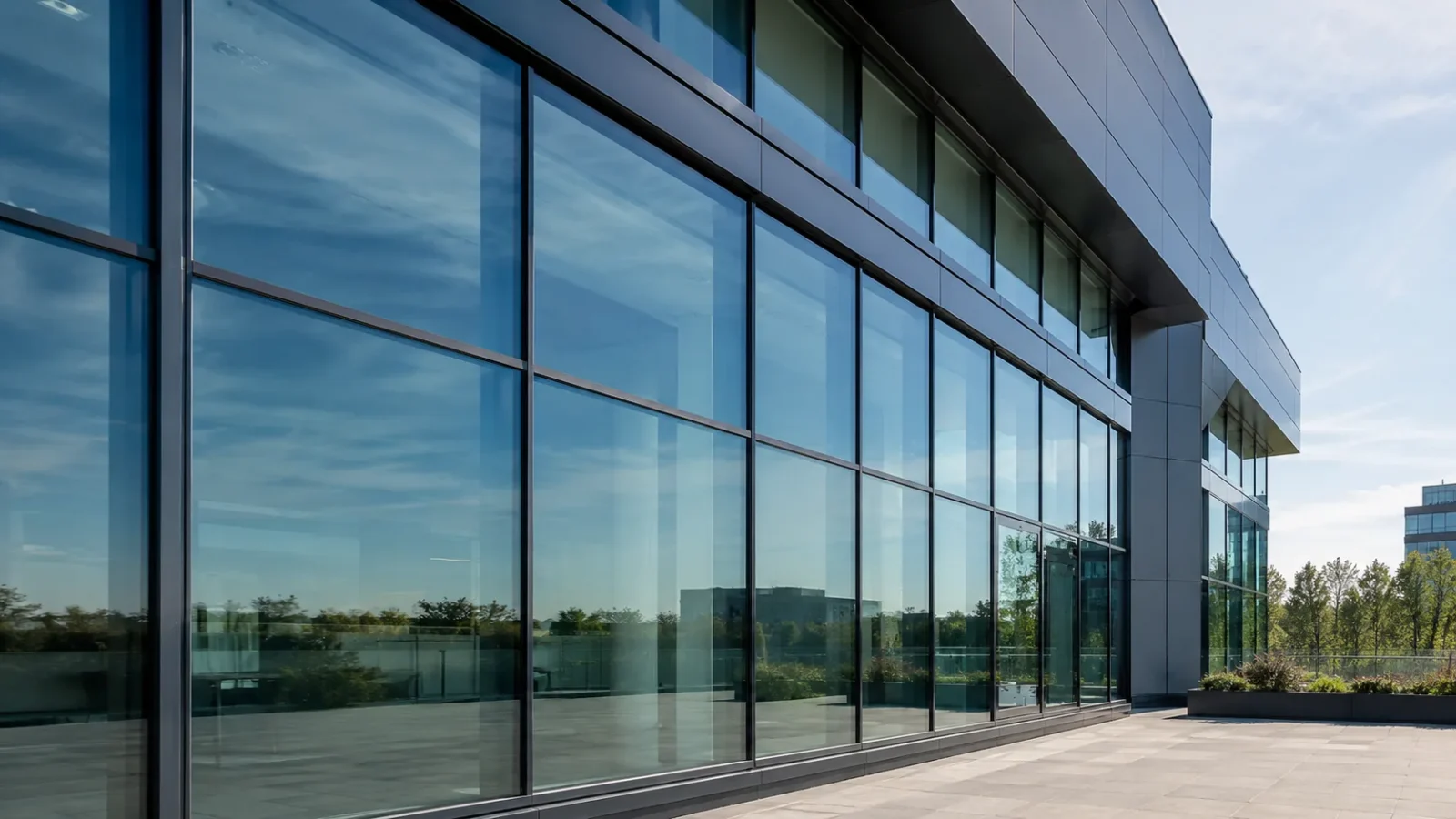
Low-E glass, also known as low emissivity glass, is a coated glass product designed to improve thermal insulation and building energy performance. The Low-E coating helps reduce heat transfer through the glass while maintaining visible light transmission, making it suitable for modern windows, facades, curtain walls and insulated glass units.
Barrett Limited supplies custom Low-E glass for architectural glazing, commercial buildings, residential windows, curtain wall systems and energy efficient building projects. We support different glass combinations, thickness options, insulated glass unit assembly and export packing according to project specifications.
What Is Low-E Glass?
Low-E glass is produced with a special low emissivity coating on the glass surface. This coating helps control the movement of heat energy through the glass, improving indoor comfort and reducing energy loss in building applications.
In architectural projects, Low-E glass is commonly used as part of insulated glass units. By combining Low-E glass with double glazing or other glass structures, building projects can achieve better thermal insulation, solar control and energy efficiency compared with ordinary single glazing.
Main Advantages of Low-E Glass
Low-E glass is widely selected for buildings where energy performance, comfort and exterior appearance are important. It is suitable for both commercial and residential architectural glazing systems.
- Helps improve thermal insulation performance
- Reduces heat transfer through windows and facades
- Can support energy efficient building design
- Suitable for insulated glass units and curtain wall systems
- Maintains visible light transmission depending on glass type and coating
- Can be combined with tempered glass or laminated glass
- Available for windows, doors, facades and commercial building envelopes
Common Applications
Low-E glass is commonly used in building projects where thermal comfort, energy saving and solar control are required. It is especially suitable for large glazing areas and modern building envelopes.
- Energy efficient windows
- Facade and curtain wall systems
- Commercial office buildings
- Residential apartments and villas
- Hotels, shopping centers and public buildings
- Insulated glass units
- Exterior doors and glazing systems
- Projects requiring improved thermal performance
For better overall performance, Low-E glass is often combined with insulated glass, tempered glass, laminated glass or reflective glass according to the project design.
Available Low-E Glass Options
Barrett Limited can supply Low-E glass according to project drawings, glazing system requirements and building performance needs. Different glass combinations can be selected based on thermal insulation, safety, appearance, solar control and installation conditions.
- Clear Low-E glass
- Low-E insulated glass units
- Tempered Low-E glass
- Laminated Low-E glass
- Low-E glass combined with reflective glass
- Low-E glass for curtain walls
- Low-E glass for windows and doors
- Custom Low-E glass structures for building projects
Low-E Glass Specifications
| Product Name | Low-E Glass / Low Emissivity Glass / Energy Efficient Glass |
|---|---|
| Glass Type | Coated architectural glass for thermal insulation and energy efficient glazing |
| Glass Options | Clear Low-E glass, tempered Low-E glass, laminated Low-E glass and Low-E insulated glass units |
| Common Applications | Windows, doors, facades, curtain walls, commercial buildings and insulated glass systems |
| Processing Options | Cutting, edging, tempering, laminating, insulated glass assembly, coating-side handling and export packing |
| Performance Focus | Thermal insulation, solar control, comfort, energy efficiency and building envelope performance |
| Packing | Export wooden crates, protective separation, project labels and shipment-safe packing available |
Low-E Glass Processing Overview
Low-E glass processing requires careful handling because the coated surface must be protected during cutting, washing, assembly and packing. When Low-E glass is used in insulated glass units, the coating position should be selected according to the required thermal and solar control performance.
For project supply, accurate glass dimensions, coating requirements, edge quality and correct installation orientation are important. If Low-E glass is combined with tempered or laminated glass, the related processing steps should be confirmed before production.
Low-E Glass and Insulated Glass Units
Low-E glass is often used as part of insulated glass units for windows, curtain walls and facades. The sealed cavity of an insulated glass unit helps reduce heat transfer, while the Low-E coating further improves thermal performance and solar control.
This combination is suitable for building projects that require energy efficiency, indoor comfort and modern architectural appearance. Buyers can select different glass thicknesses, spacer options, coating types and safety glass combinations according to project needs.
Quality Control and Packing
Quality control for Low-E glass focuses on coating protection, surface condition, glass size, edge quality, cavity assembly when used in IGU structures, and safe packing for transportation. Coated glass products should be handled carefully to avoid scratches, stains or coating damage.
Barrett Limited can support project-based inspection, product labeling and export packing according to glass structure, size, quantity and destination requirements.
Related Products
Low-E glass is closely related to other architectural and energy efficient glass products.
- Insulated Glass for energy efficient windows and curtain walls
- Reflective Glass for solar control and facade appearance
- Tempered Glass for strength and safety applications
- Laminated Glass for safety and acoustic performance
- Float Glass as base glass for further processing
Frequently Asked Questions
What is Low-E glass used for?
Low-E glass is commonly used for windows, doors, facades, curtain walls and insulated glass units where thermal insulation, solar control and energy efficiency are required.
Is Low-E glass suitable for insulated glass units?
Yes. Low-E glass is often used in insulated glass units to improve thermal performance and building energy efficiency.
Can Low-E glass be tempered?
Some Low-E glass products can be tempered depending on coating type and project requirements. Processing requirements should be confirmed before production.
What is the difference between Low-E glass and reflective glass?
Low-E glass focuses on thermal insulation and energy efficiency, while reflective glass is often selected for solar control, exterior appearance and privacy effects. In some projects, both performance requirements may be considered together.
What information is needed for a Low-E glass quotation?
Please provide glass structure, size, thickness, quantity, coating requirement, insulated glass unit structure, drawings, application details and packing requirements. This helps us recommend a suitable Low-E glass solution.
Request Custom Low-E Glass
If your project requires custom Low-E glass, send us your drawings, glass structure, size, thickness, quantity, coating requirements and application details. Our team can help review the specifications and suggest suitable Low-E glass options for your windows, facades or insulated glass units.