
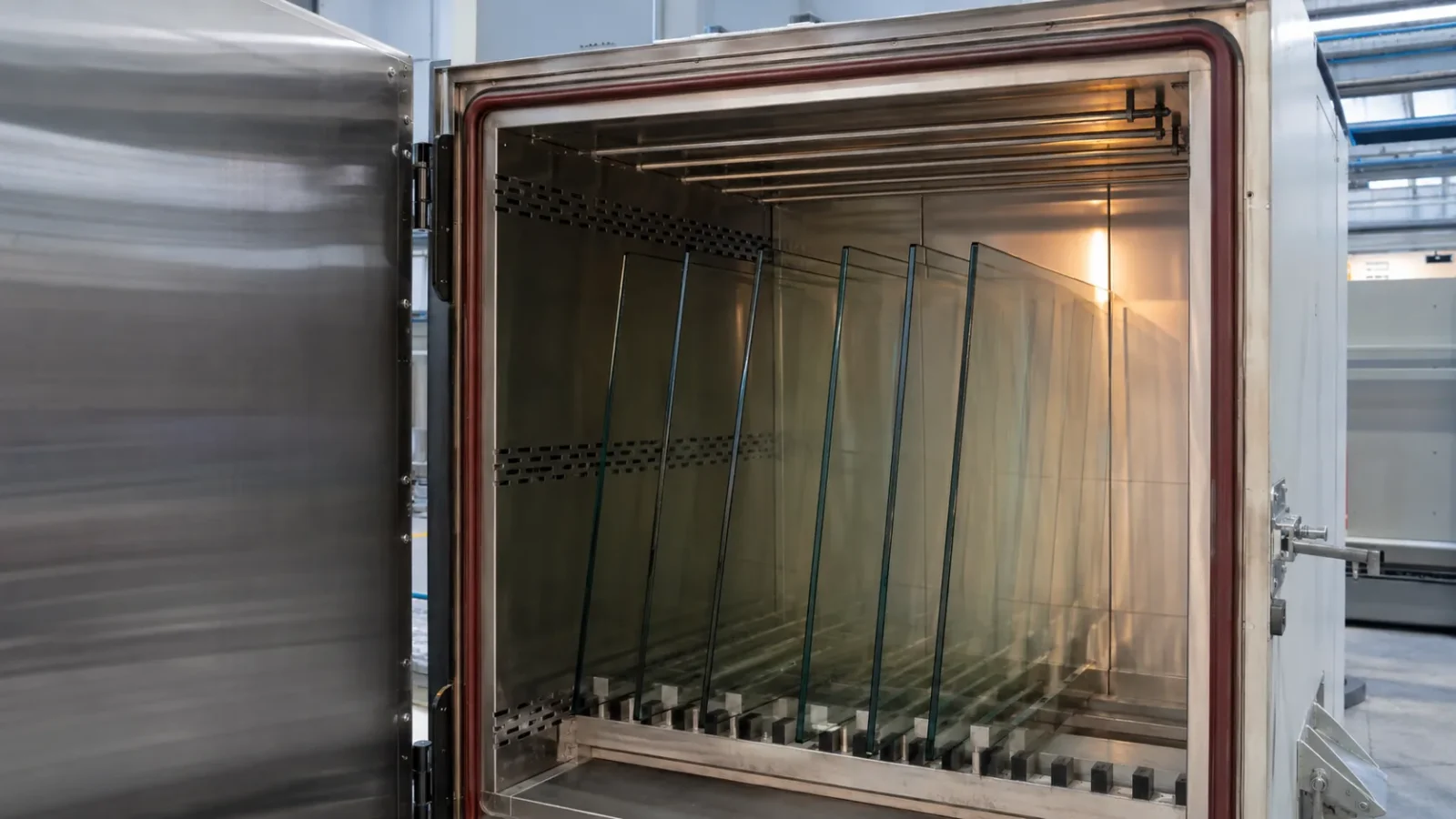
Heat soak test is an additional testing process for tempered glass. It is mainly used to help reduce the risk of spontaneous breakage in safety-sensitive architectural glass applications. For projects such as facades, curtain walls, glass railings, pool fencing and public building glazing, heat soaked tempered glass may be required by project specifications or safety requirements.
Barrett Limited provides heat soak test support for tempered glass and heat soaked glass used in architectural and safety glass projects. Heat soak testing is commonly related to architectural facade glass, glass balustrade and railing, glass pool fencing, shower glass, public building glass and other applications where safety is important.
What Is Heat Soak Test?
Heat soak test is a controlled heating process applied to tempered glass after the tempering process. The purpose is to expose tempered glass panels to a specific elevated temperature condition for a period of time, so that glass with higher risk of spontaneous breakage may break during the test instead of after installation.
One of the known causes of spontaneous breakage in tempered glass is nickel sulfide inclusion. Heat soak testing cannot completely remove every possible risk, but it can help reduce the probability of spontaneous breakage in final use. For this reason, heat soaked tempered glass is often selected for high-rise buildings, railings, facades and safety-sensitive public projects.
Heat Soak Test Workflow
Heat soak testing is performed after glass has already been tempered. The glass must first complete all normal tempered glass processing steps, including cutting, edging, drilling, tempering and initial inspection.
- Tempered glass production: Complete cutting, edge processing, drilling, notching, washing, heating and quenching.
- Initial inspection: Check glass size, edge quality, holes, surface condition, bow, wave and visual appearance.
- Loading: Place tempered glass panels into the heat soak test chamber with suitable spacing and support.
- Heating stage: Raise the chamber temperature according to the heat soak test procedure.
- Holding stage: Keep the glass under controlled temperature conditions for the required test duration.
- Cooling stage: Cool down the glass under controlled conditions after the holding stage.
- Final inspection: Check surviving glass panels for appearance, edge condition, labels and handling safety.
- Packing: Pack qualified heat soaked glass with separators, labels and export wooden crates according to project requirements.
Why Heat Soak Test Is Used
Tempered glass has higher strength and safer breakage behavior than ordinary annealed glass, but a small risk of spontaneous breakage may still exist. Heat soak testing is used as a risk reduction measure for projects where unexpected glass breakage could cause safety, replacement or maintenance problems.
Heat soak test is especially important for glass installed in difficult-to-replace locations, high-rise facades, public spaces, railing systems and exterior safety applications. It can help improve project reliability and customer confidence in architectural safety glass systems.
Suitable Glass Products
Heat soak testing is mainly used for tempered glass products. It is especially relevant when tempered glass is used in exterior or safety-critical applications.
- Heat Soaked Glass for projects requiring additional safety testing after tempering
- Tempered Glass for general architectural and safety glass applications
- Low Iron Glass when premium appearance and safety processing are both required
- Laminated Glass when tempered glass layers are combined with safety interlayers
- Insulated Glass when heat soaked tempered glass is used as part of IGU structures
Common Applications
Heat soaked tempered glass is commonly used in architectural projects where glass breakage risk should be reduced as much as possible. It is often specified for exterior and public safety applications.
- Architectural Facade Glass and Curtain Wall Glass for high-rise and commercial building envelopes
- Glass Balustrade and Railing for balconies, stairs, terraces and public areas
- Glass Pool Fencing for outdoor pool safety barriers
- Architectural Window Glass for selected safety-sensitive glazing systems
- Shower Glass Enclosures where safety and tempered glass quality are important
- Public buildings, shopping centers, hotels, schools, hospitals and transportation facilities
Key Testing Requirements
Heat soak test should be planned according to project specifications, glass type, glass thickness, final application and safety requirements. The test process should be documented and traceable for project orders.
| Testing Item | Post-tempering heat soak test for tempered glass panels |
|---|---|
| Suitable Glass | Tempered glass, low iron tempered glass, tempered glass for laminated structures and selected IGU components |
| Performance Focus | Risk reduction for spontaneous breakage, safety improvement, project reliability and quality control |
| Common Applications | Facades, curtain walls, glass railings, pool fencing, public buildings, exterior glazing and safety-sensitive areas |
| Project Information Needed | Glass size, thickness, quantity, application, project specification, inspection requirement, labeling and packing details |
Heat Soaked Tempered Glass for Facades
Facade and curtain wall glass may be installed at high elevations or in areas where replacement is difficult. For these projects, heat soaked tempered glass can be selected to help reduce the risk of spontaneous breakage after installation.
When heat soaked tempered glass is used in facades, it may also be combined with Low-E glass, reflective glass, laminated glass or insulated glass units according to the building performance requirements. The final glass structure should match the facade system, wind load, thermal performance and safety specification.
Heat Soaked Glass for Railings and Pool Fencing
Glass railings and pool fencing are safety-sensitive applications because the glass is often used as a barrier. Heat soaked tempered glass can be considered for these projects to improve reliability and reduce breakage risk.
For railing and pool fencing glass, edge quality, hole position, hardware compatibility and glass thickness should be confirmed before tempering. If laminated structures are required, tempered glass layers can also be combined with interlayers for better post-breakage retention.
Heat Soak Test and Tempered Glass Processing
Heat soak testing is not a replacement for proper tempered glass processing. It is an additional quality control process after tempering. Good cutting, edge processing, drilling, washing, heating, quenching and inspection are still necessary for high-quality tempered glass.
Before heat soak testing, all glass panels should be checked for visible defects, edge problems, incorrect holes or processing errors. Glass that does not meet basic quality requirements should not move forward as finished project glass.
Heat Soak Test and Glass Quality Control
Heat soak test is part of the broader glass quality control process. It should be combined with dimensional inspection, edge inspection, hole inspection, surface inspection, bow and wave control, visual checking and packing inspection.
For project orders, heat soak test records, glass labels and packing lists can help improve traceability. This is especially useful for large facade, railing or public building projects with many glass panels.
Limitations of Heat Soak Test
Heat soak testing can reduce the probability of spontaneous breakage, but it cannot guarantee that tempered glass will never break. Glass breakage may also be caused by impact, installation stress, edge damage, frame pressure, thermal stress, structural movement or improper handling.
Therefore, heat soaked glass should still be designed, installed, handled and maintained correctly. For safety-critical areas, laminated safety glass structures may also be considered according to project requirements.
Quality Control and Packing After Heat Soak Test
After heat soak testing, surviving glass panels should be inspected again. Inspection points include surface condition, edge quality, labels, size accuracy, glass appearance and packing condition.
Barrett Limited can support project labels, panel numbering, export wooden crate packing, protective separators and packing sequence according to drawings, installation areas, project schedule and shipping requirements.
Related Glass Processing Services
Heat soak test is often related to other glass processing and quality control steps. The following pages may also be useful for project planning:
- Tempered Glass Processing
- Glass Quality Control
- Glass Cutting and Edge Processing
- Glass Drilling and CNC Processing
- Laminated Glass Processing
Related Product Options
The following glass products are commonly related to heat soak testing:
Frequently Asked Questions
What is heat soak test for tempered glass?
Heat soak test is an additional controlled heating process applied to tempered glass after tempering. It helps reduce the risk of spontaneous breakage in final use.
Why is heat soak test needed?
Heat soak testing is used to reduce spontaneous breakage risk, especially in safety-sensitive applications such as facades, railings, pool fencing and public building glazing.
Does heat soak test completely prevent glass breakage?
No. Heat soak testing can reduce the probability of spontaneous breakage, but it cannot eliminate all breakage risks. Glass can still break due to impact, installation stress, edge damage or improper handling.
Where is heat soaked glass commonly used?
Heat soaked glass is commonly used for facades, curtain walls, glass railings, pool fencing, high-rise buildings, public buildings and other safety-sensitive architectural glass applications.
What information is needed for heat soaked glass production?
Please provide glass size, thickness, quantity, application, project specification, drawings, testing requirement, labeling requirement and packing details.
Request Heat Soaked Tempered Glass
If your project requires heat soak test or heat soaked tempered glass, send us your drawings, glass size, thickness, quantity, application and project specification. Barrett Limited can help review the requirements and suggest suitable heat soaked glass options for facades, railings, pool fencing and architectural safety glass projects.