
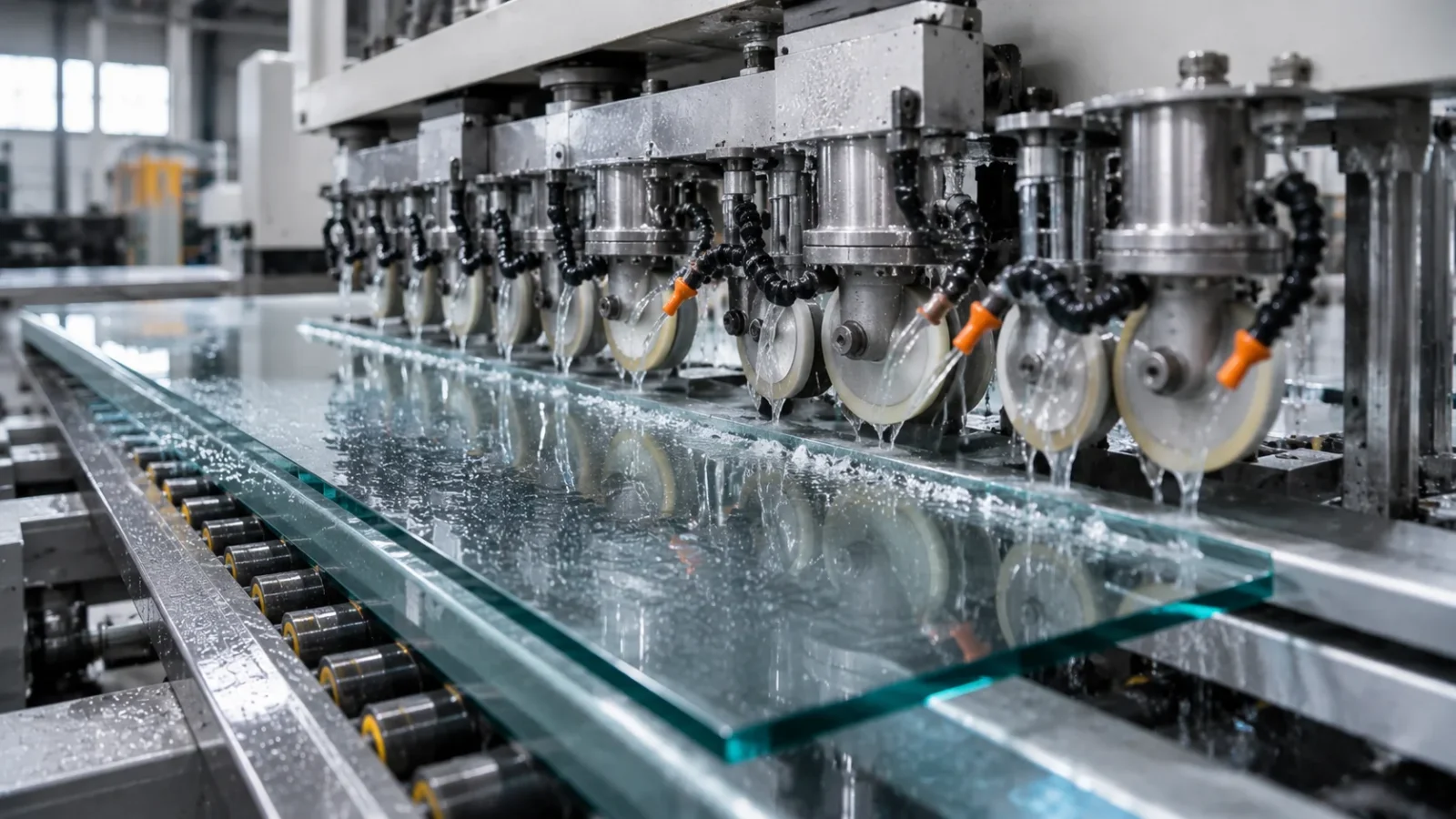
Float glass is the base material used for many processed architectural glass products. Before glass becomes tempered glass, laminated glass, insulated glass, Low-E glass, mirror glass or decorative glass, it often starts as flat glass produced through the float glass manufacturing process.
Barrett Limited supplies processed architectural glass based on different flat glass materials, including float glass, low iron glass, tempered glass, laminated glass, insulated glass and Low-E glass. Understanding the flat glass process helps buyers better understand glass quality, thickness, clarity and later processing options.
What Is Float Glass?
Float glass is flat glass made by floating molten glass on a bath of molten tin. This process creates a smooth, flat and uniform glass surface. Float glass is widely used as the base material for windows, doors, facades, partitions, railings, furniture glass, mirrors and other processed glass products.
After float glass is produced, it can be cut, edged, drilled, tempered, laminated, coated, silvered or assembled into insulated glass units according to project needs. This makes float glass one of the most important base materials in the architectural glass industry.
Basic Float Glass Manufacturing Process
The float glass manufacturing process is highly industrialized. The general process includes raw material preparation, melting, floating, annealing, cutting and inspection.
- Raw material preparation: Silica sand, soda ash, limestone and other materials are prepared and mixed according to glass composition requirements.
- Melting: Raw materials are melted at high temperature to form molten glass.
- Float bath: Molten glass flows onto a molten tin bath, where it spreads and forms a flat ribbon.
- Thickness control: The glass ribbon thickness is controlled according to production requirements.
- Annealing: The glass ribbon passes through an annealing lehr to reduce internal stress.
- Cutting: The continuous glass ribbon is cut into standard sheets or jumbo sizes.
- Inspection: The glass is inspected for thickness, surface quality, optical defects and size accuracy.
- Packing and distribution: Finished float glass sheets are packed and supplied for further processing or direct use.
Float Glass as a Base Material for Processing
Float glass is not only a finished glass product. It is also the starting material for many higher-value processed glass products. Through cutting, edge processing, tempering, laminating, coating or IGU assembly, flat glass can become different architectural glass products for various applications.
- Tempered Glass is made by cutting, edging and heat treating float glass.
- Laminated Glass is made by bonding two or more glass sheets with safety interlayers.
- Insulated Glass is made by assembling glass panes with sealed cavities.
- Low-E Glass is made with energy-control coating for architectural glazing.
- Mirror Glass is produced by applying reflective backing to suitable flat glass.
- Acid Etched Glass and Frosted Glass are processed to create privacy and decorative surface effects.
Common Types of Flat Glass Materials
Different flat glass materials can be selected according to transparency, color, surface quality, thickness and final processing requirements.
- Clear float glass: Standard flat glass used for many architectural and decorative applications.
- Low iron glass: Glass with reduced iron content, offering clearer appearance and less greenish tint.
- Tinted glass: Flat glass with body color for solar control and decorative appearance.
- Reflective coated glass: Flat glass with reflective coating for solar control and facade design.
- Patterned glass: Rolled or textured flat glass used for privacy and decoration.
- Mirror base glass: Flat glass selected for mirror production and decorative interior use.
Suitable Glass Products
Float and flat glass can be further processed into many architectural glass products. The correct base glass should be selected according to the final application and processing route.
- Float Glass for general architectural and processing use
- Low Iron Glass for premium projects requiring clearer appearance
- Tempered Glass for safety and strength
- Laminated Glass for safety, acoustic and post-breakage retention
- Insulated Glass for energy-efficient windows and facades
- Low-E Glass for energy-saving architectural glazing
Common Applications
Flat glass and processed float glass are used in nearly all architectural and decorative glass fields. The final application depends on the processing method and product structure.
- Architectural Window Glass for residential, commercial and public building windows
- Architectural Facade Glass and Curtain Wall Glass for exterior building systems
- Office Glass Partitions for commercial interior glass walls
- Shower Glass Enclosures for bathroom glass applications
- Custom Table Top Glass for furniture and decorative interiors
- Cabinet Glass Door Panels for furniture and display cabinet projects
Key Material Selection Requirements
The quality of processed architectural glass depends partly on the base flat glass material. Before processing, buyers should consider glass thickness, size, color, clarity, surface quality, coating requirement and final application.
| Material Type | Clear float glass, low iron glass, tinted glass, patterned glass, reflective glass and mirror base glass |
|---|---|
| Further Processing | Cutting, edging, drilling, tempering, laminating, coating, mirror processing and insulated glass unit assembly |
| Important Details | Thickness, size, color, clarity, surface quality, optical distortion, coating compatibility and application requirement |
| Common Applications | Windows, facades, partitions, doors, railings, furniture, mirrors, decorative panels and safety glass projects |
| Project Information Needed | Glass type, size, thickness, processing requirement, application, quantity, quality requirement and packing details |
From Float Glass to Tempered Glass
To produce tempered glass, float glass is first cut to size, edge processed, drilled or notched when required, washed and then heat treated through the tempering process. Tempered glass has higher strength and safer breakage behavior than ordinary float glass.
Because tempered glass cannot be cut or drilled after tempering, all processing details must be confirmed before heat treatment. Learn more about Tempered Glass Processing.
From Float Glass to Laminated Glass
To produce laminated glass, two or more glass sheets are combined with interlayers such as PVB or SGP. The laminated structure improves safety and helps hold broken glass fragments together after breakage.
Laminated glass is widely used for facades, railings, partitions, canopies, skylights, acoustic windows and safety-sensitive applications. Learn more about Laminated Glass Processing.
From Flat Glass to Insulated Glass Units
Flat glass can also be assembled into insulated glass units. IGU products use two or more glass panes with sealed cavities to improve thermal insulation and building energy performance.
Insulated glass can combine Low-E glass, reflective glass, tempered glass or laminated glass according to project requirements. Learn more about Insulated Glass Unit Manufacturing.
Low Iron Glass and Premium Flat Glass Options
Low iron glass is often selected for premium architectural and decorative projects where clearer appearance is required. Compared with standard clear float glass, low iron glass has less greenish tint, especially on thicker edges.
Low iron glass is commonly used for table tops, display glass, facades, railings, shower glass, decorative panels and premium laminated glass applications.
Quality Control for Float and Flat Glass
Quality control for float and flat glass focuses on thickness, size, surface defects, optical quality, color consistency, scratches, bubbles, inclusions and packing condition. For further processing, the base glass must also match tempering, laminating, coating or IGU requirements.
For project orders, correct base glass selection can reduce later processing problems and improve final product quality. See Glass Quality Control for more details about inspection items for processed architectural glass.
Related Glass Processing Services
- Glass Cutting and Edge Processing
- Glass Drilling and CNC Processing
- Tempered Glass Processing
- Laminated Glass Processing
- Insulated Glass Unit Manufacturing
Related Product Options
Frequently Asked Questions
What is float glass?
Float glass is flat glass made by floating molten glass on molten tin. It creates a smooth and uniform glass surface and is widely used as the base material for processed architectural glass.
Is float glass the same as tempered glass?
No. Float glass is ordinary flat glass. Tempered glass is produced by cutting, edge processing and heat treating float glass to improve strength and safety performance.
Can float glass be laminated?
Yes. Float glass can be laminated with interlayers such as PVB or SGP to produce laminated safety glass for architectural applications.
Can float glass be used for insulated glass units?
Yes. Float glass can be assembled into insulated glass units. It can also be combined with Low-E glass, reflective glass, tempered glass or laminated glass for better performance.
What information is needed for processed flat glass?
Please provide glass type, size, thickness, quantity, processing requirement, application, quality requirement and packing details.
Request Custom Processed Flat Glass
If your project requires processed flat glass, send us your drawings, glass type, size, thickness, processing requirement, application and packing details. Barrett Limited can help review the specifications and suggest suitable float glass, low iron glass, tempered glass, laminated glass or insulated glass options for architectural and decorative projects.